Young by choice.
Accordo was founded in 2020. A new company doing work with a long history behind it: no nostalgia, plenty of respect.
From the first pencil line to the last stitch. We followed one garment from idea to delivery: here is what happens, step by step, inside our workshop.
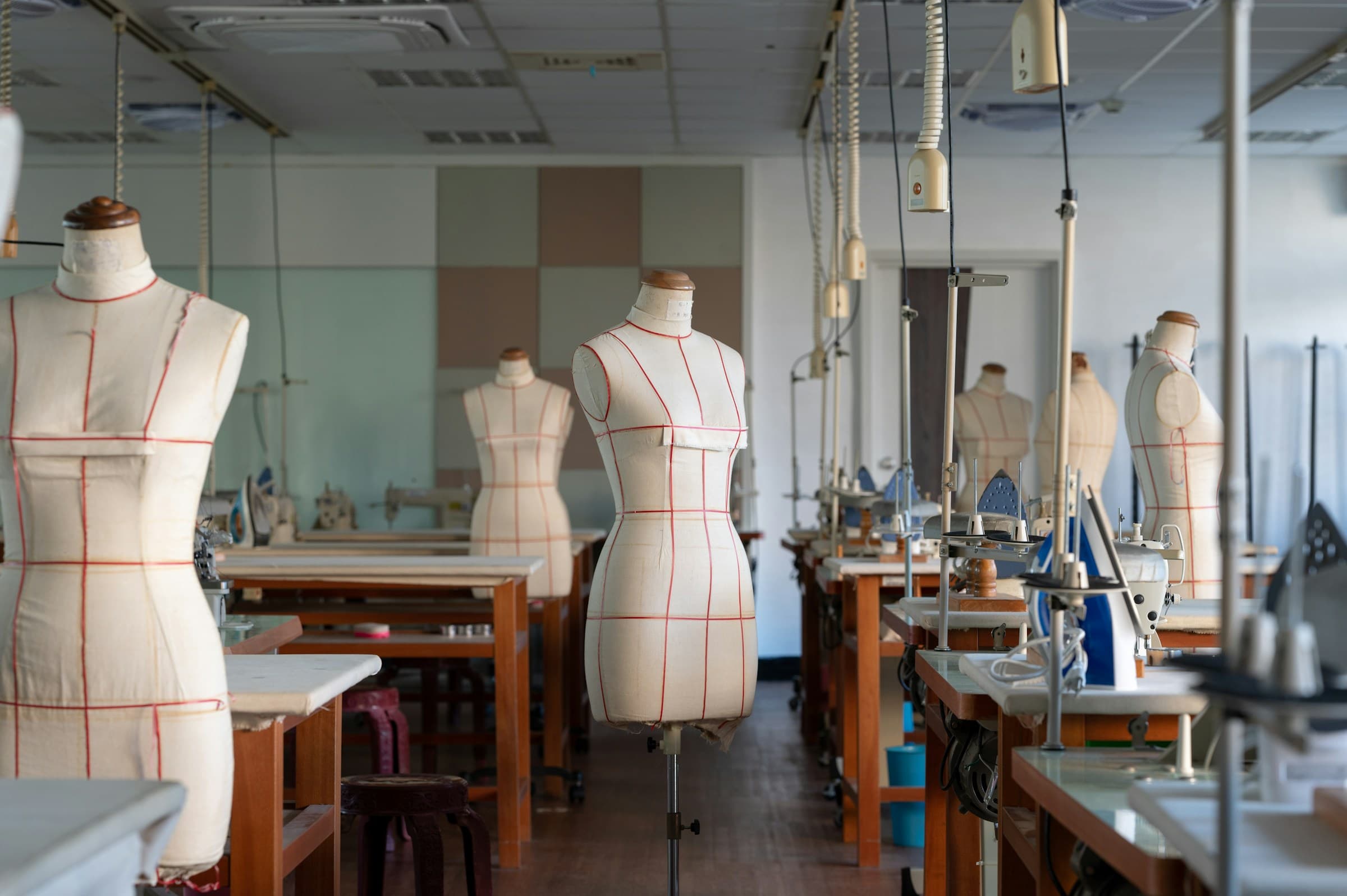
A dress is not born in a day, nor by a single hand. First it is a pencil line. Then it becomes paper, then a file, then a plot several metres long. Only then does it meet the fabric — and from there, there is no going back.
At Accordo we walk this path every day, in Mozzecane, on the plain south of Verona. We do it with tools our grandparents would not have recognised, and with a care they would have recognised at once.
This is the story of one garment, told in the order it happens.
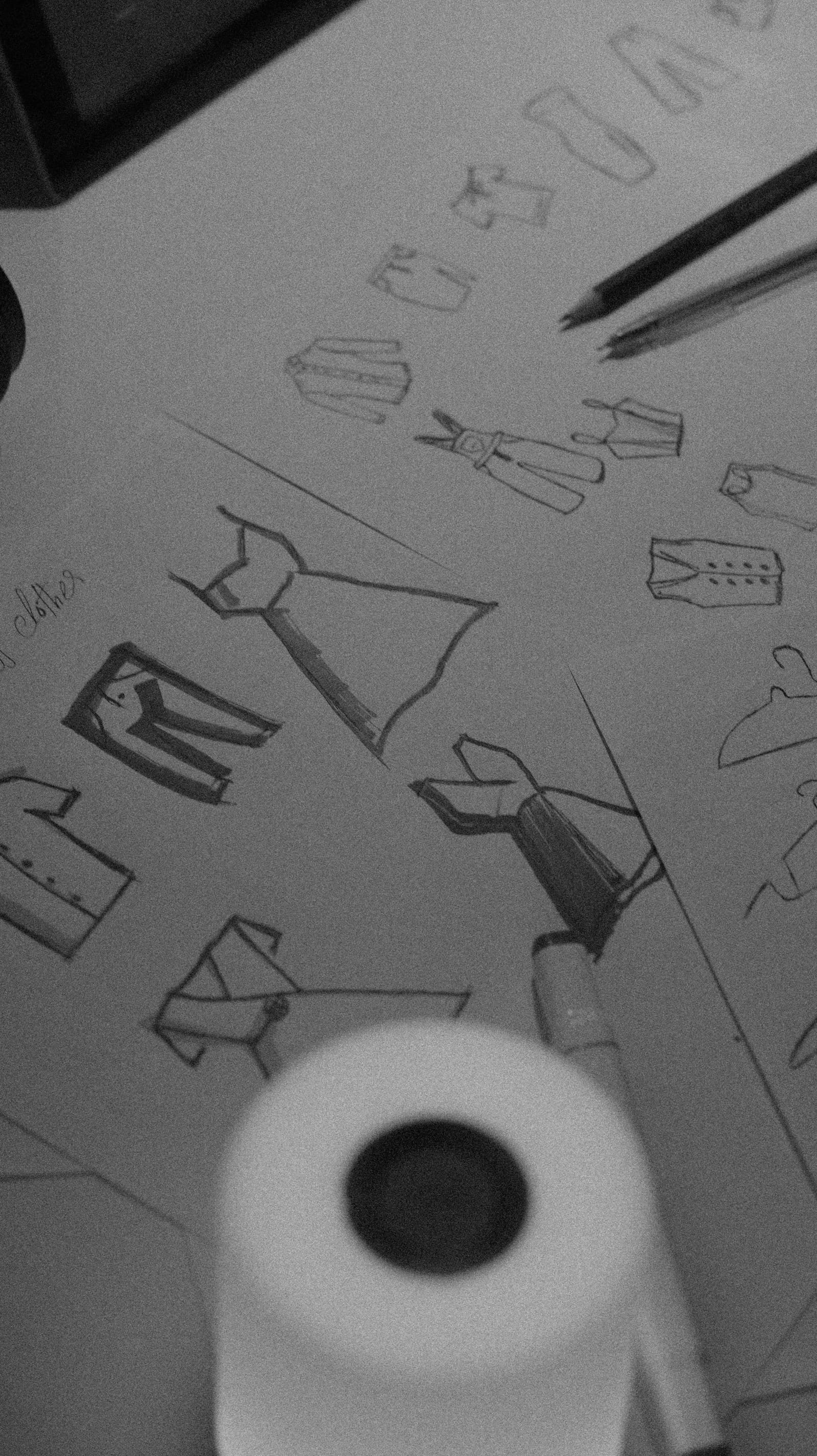
Before fabric, before measurements, there is a blank sheet. The fashion sketch is still drawn in pencil: it is the fastest way to think. One line decides where the shoulder falls, another how much the skirt can breathe.
Mistakes are frequent at this stage, and rightly so: paper is cheap, later errors are not. The sketch raises the first real questions — which fabric, which weight, which hand — and the answers come from putting the person who draws and the person who will sew at the same table.
The paper pattern translates the drawing into a language fabric understands: flat shapes that, once sewn together, become a volume. Every curve has a reason. Every notch is an appointment between two pieces that must meet to the millimetre.
This is the pattern maker’s craft — set squares, French curves and a trained eye. Fit is decided here: a garment that hangs well is almost always a pattern made well.
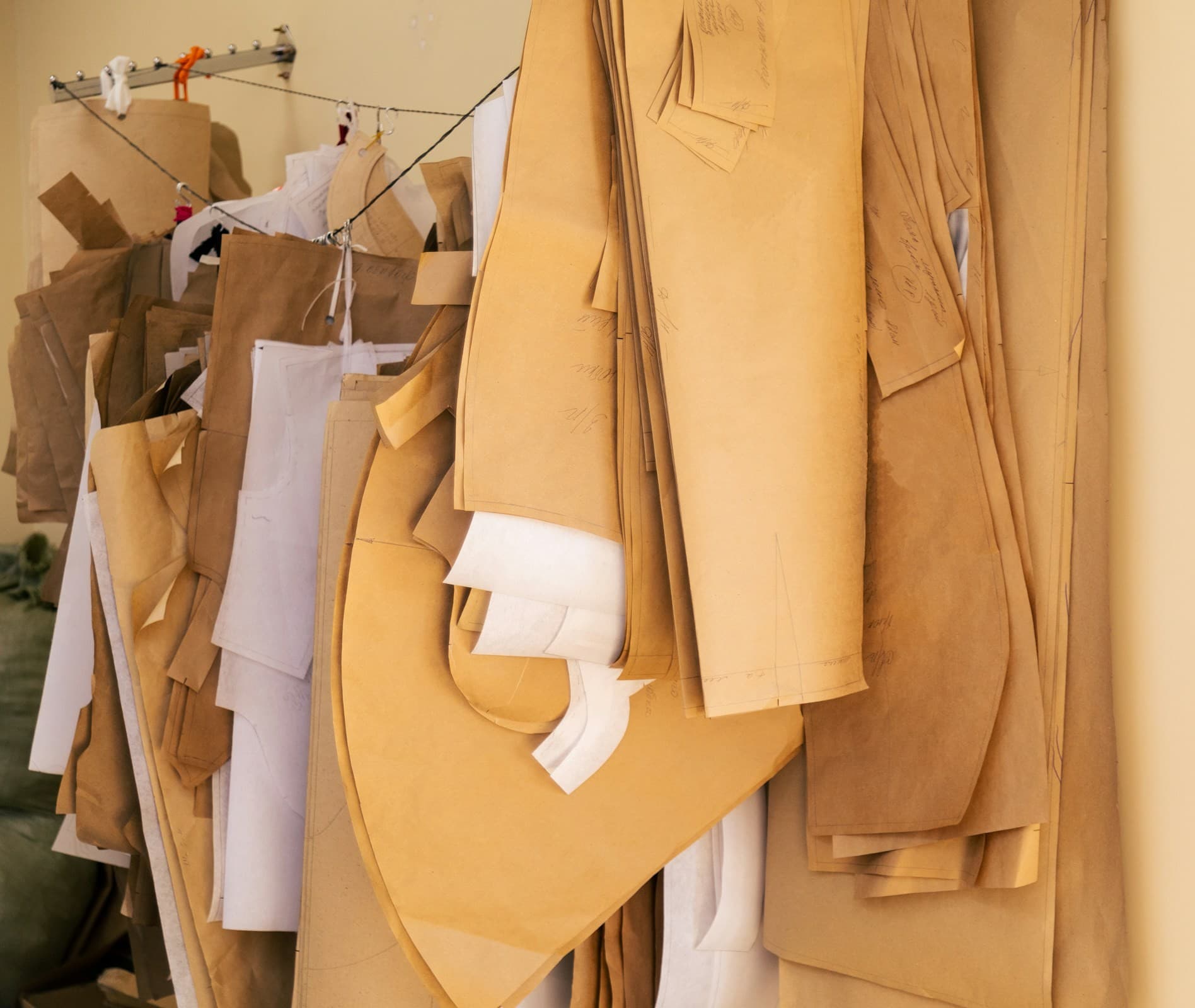
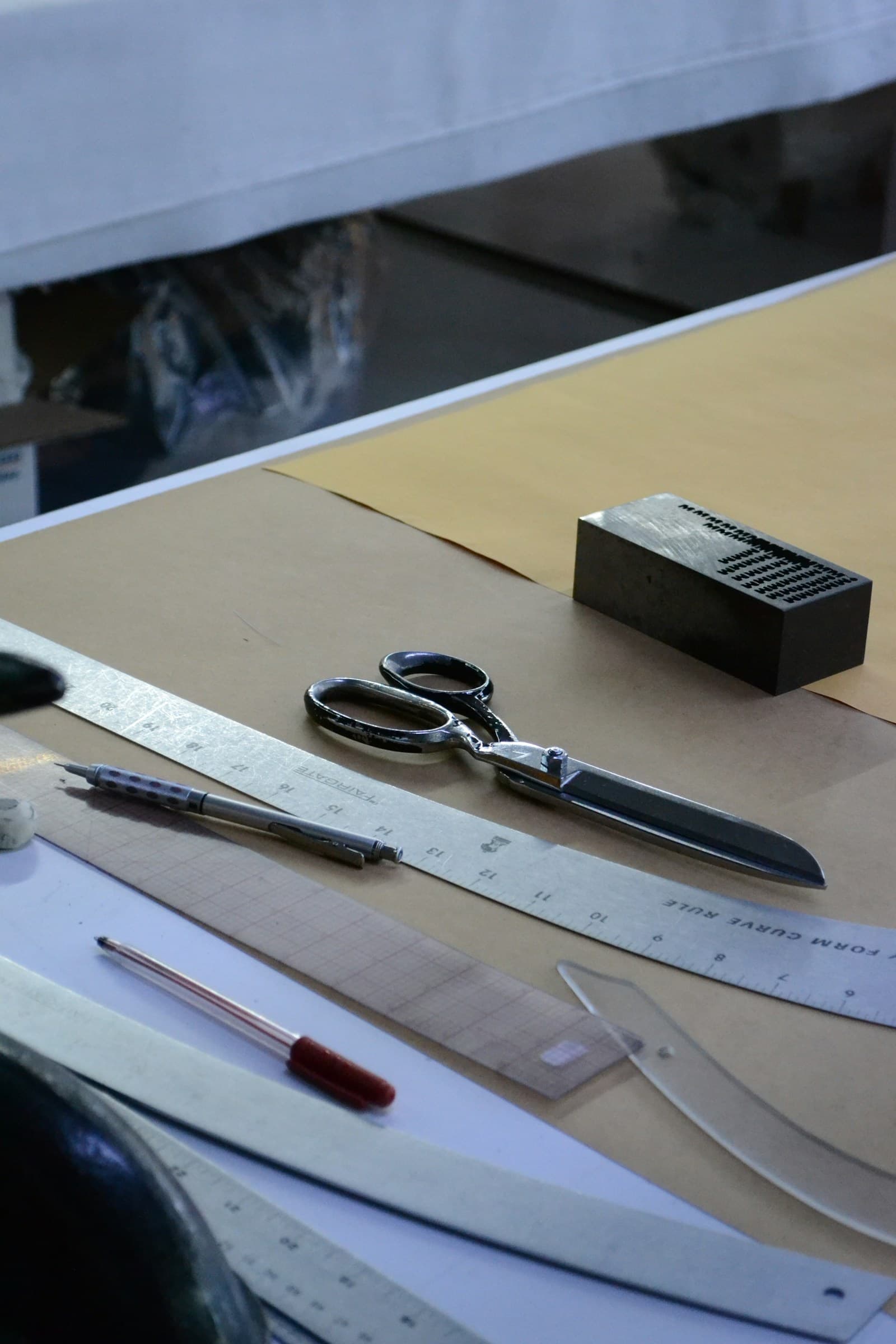
Now paper enters the computer. The pieces are digitised, graded across sizes and laid out side by side in the marker: a nesting designed to waste as little fabric as possible. It is a puzzle where every centimetre saved counts — for costs and for the environment.
Then the plotter draws everything at full scale, on a roll as long as the fabric to be cut. This is the moment the machine’s precision takes over from the hand’s intuition. Without erasing it.
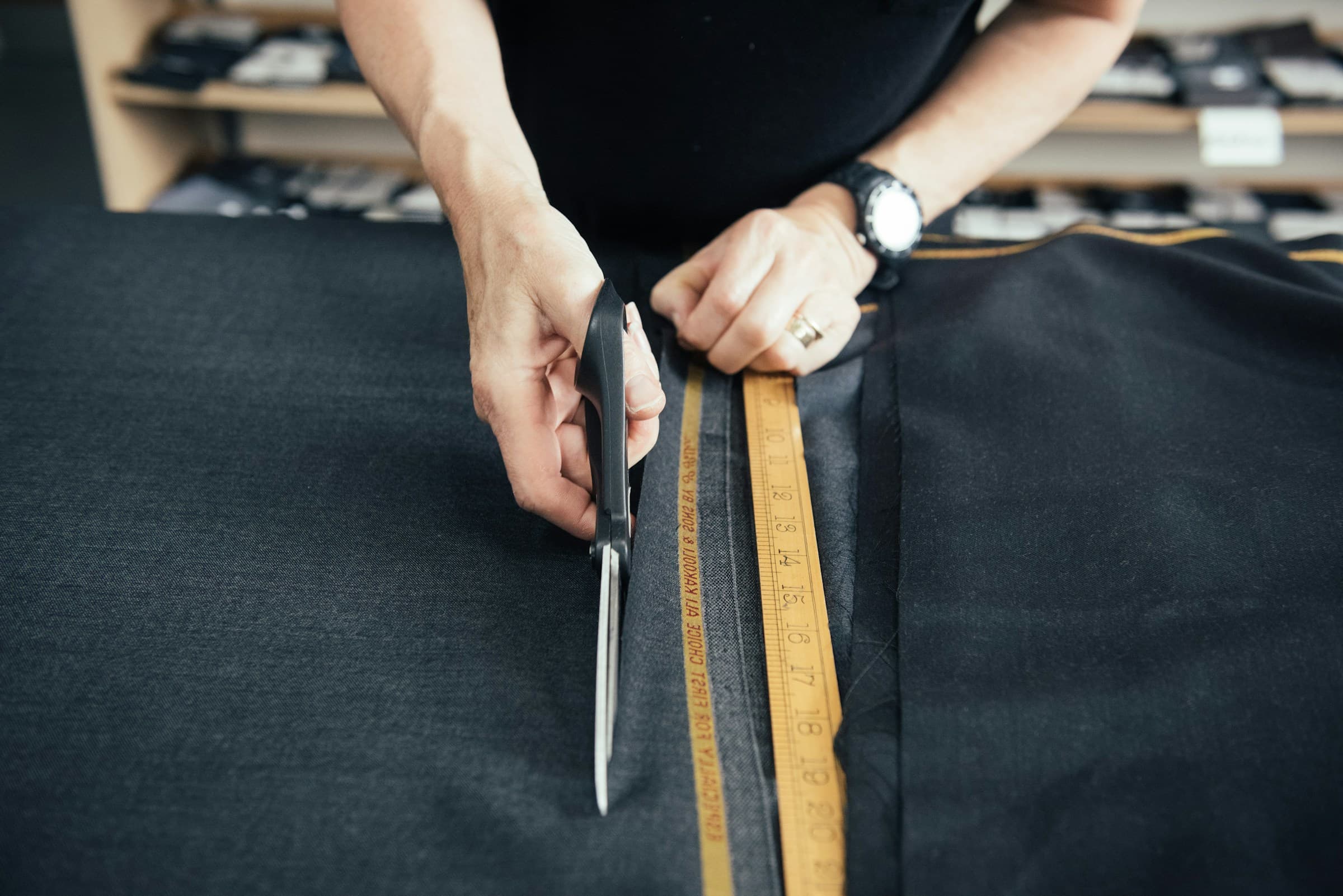
The fabric is spread in layers — the lay — and the marker is placed on top. Then it is cut. It is the sharpest step of the whole story: a moment earlier everything could still be corrected. Not any more.
That is why cutting is a slow gesture even when it is fast. Nap, grain line and colour continuity are all checked. Each piece is gathered with its companions: at this point, a dress is a tidy bundle of shapes.
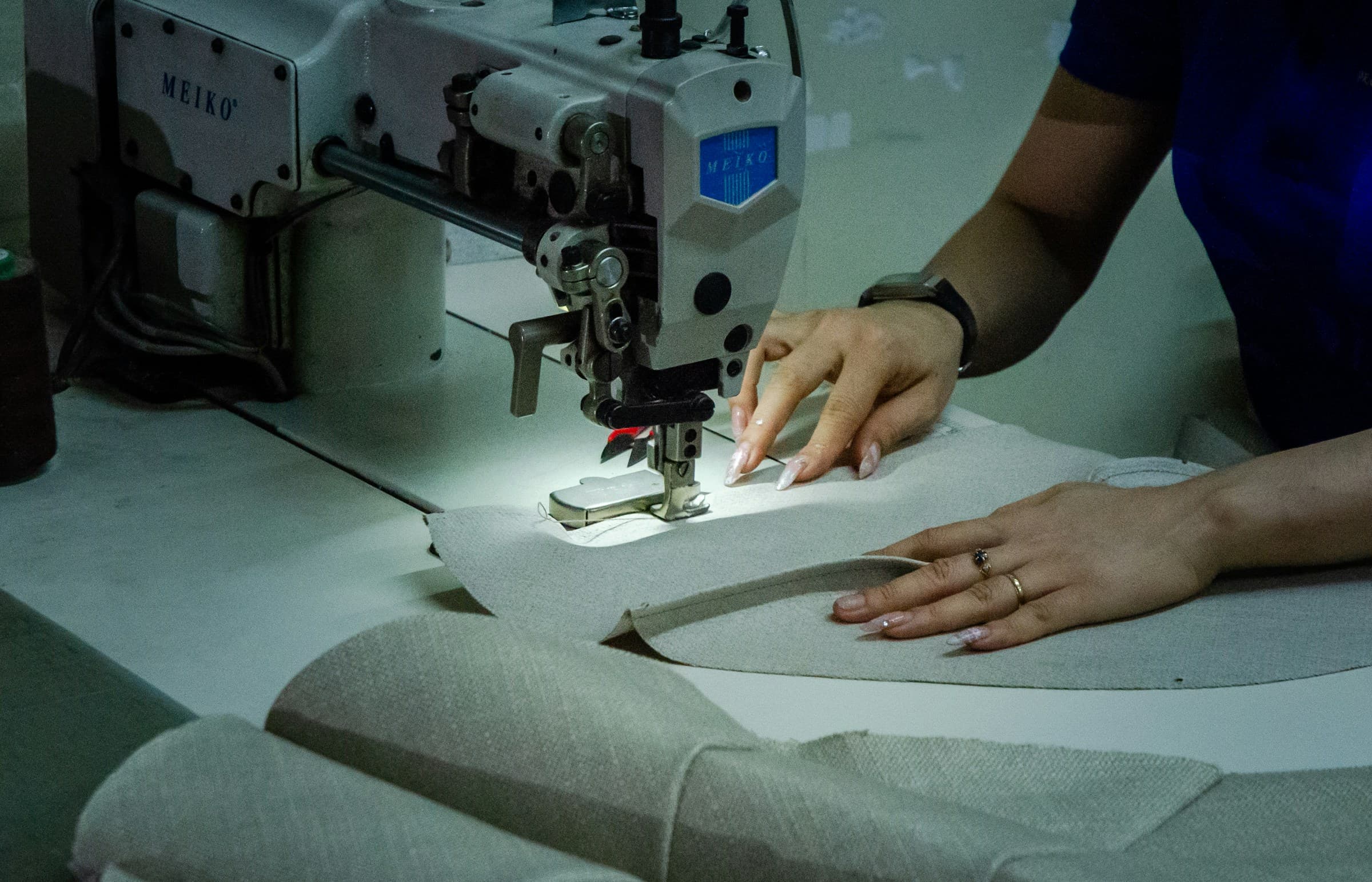
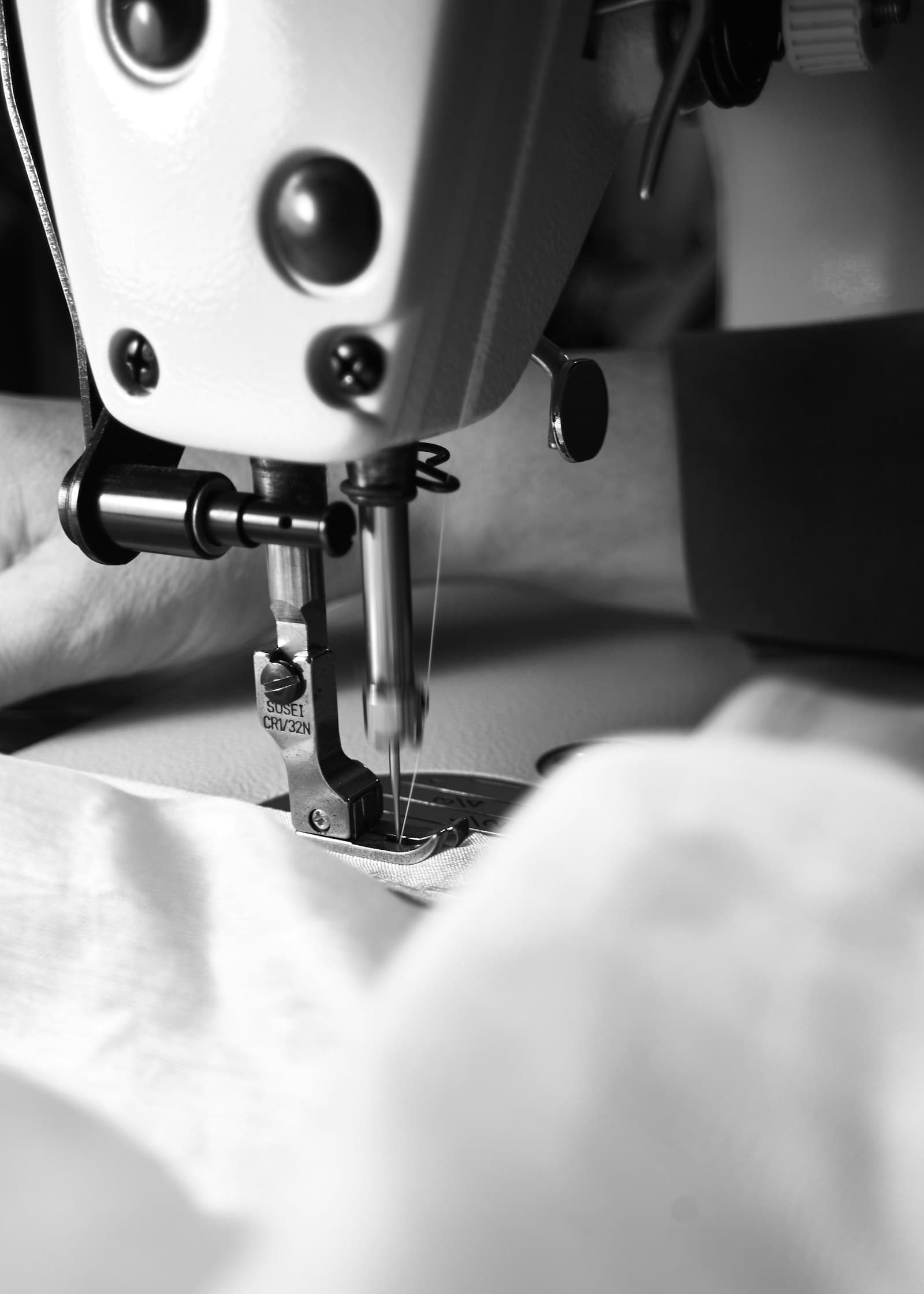
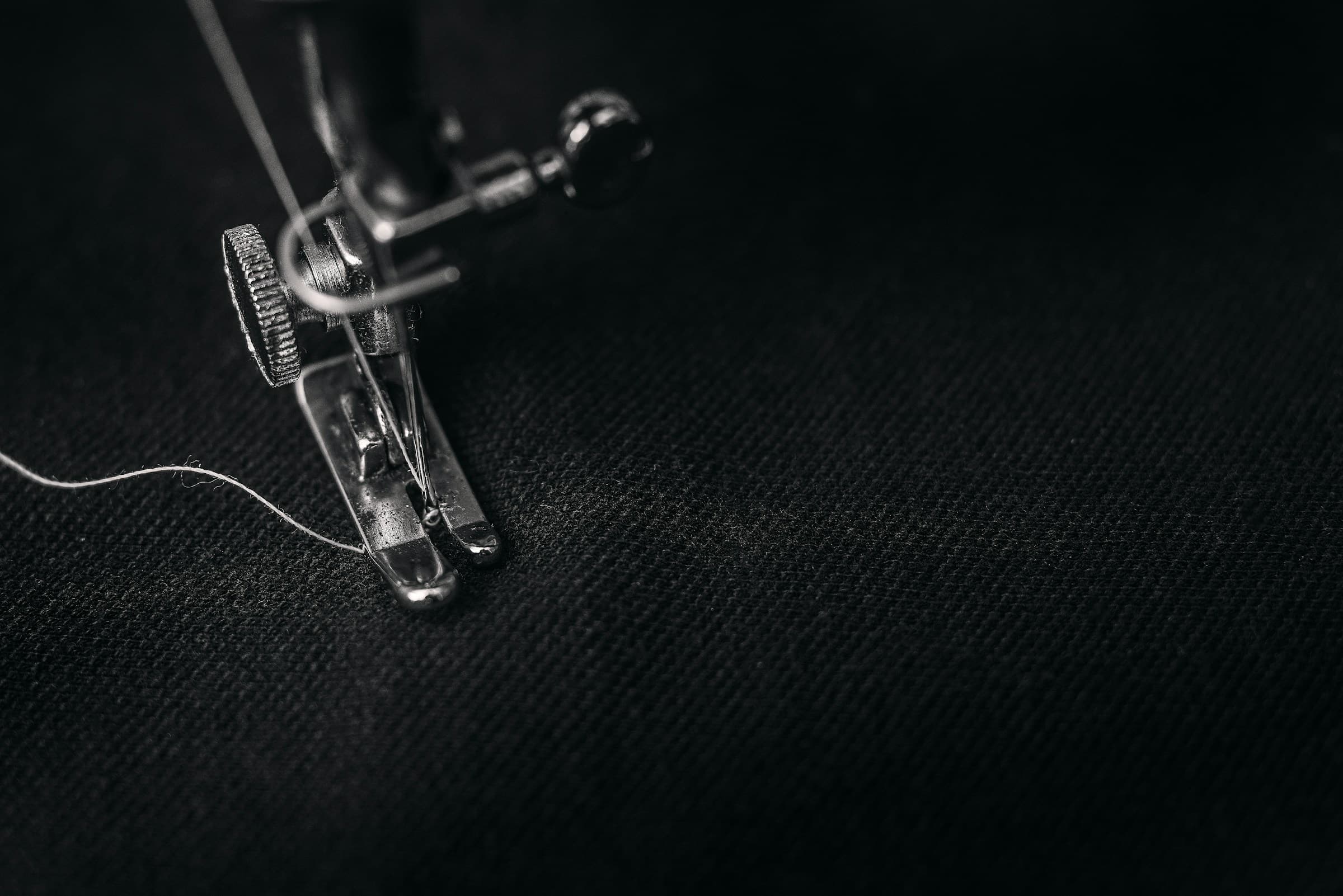
Making-up is when flat shapes become a body. Pieces are assembled, sleeves are set, the insides are finished: the part nobody sees, and the one that tells a well-made garment from a rushed one.
The machines are industrial and the pace is that of real production. But guiding the fabric under the needle are hands that can tell a crêpe from a gabardine without having to think.
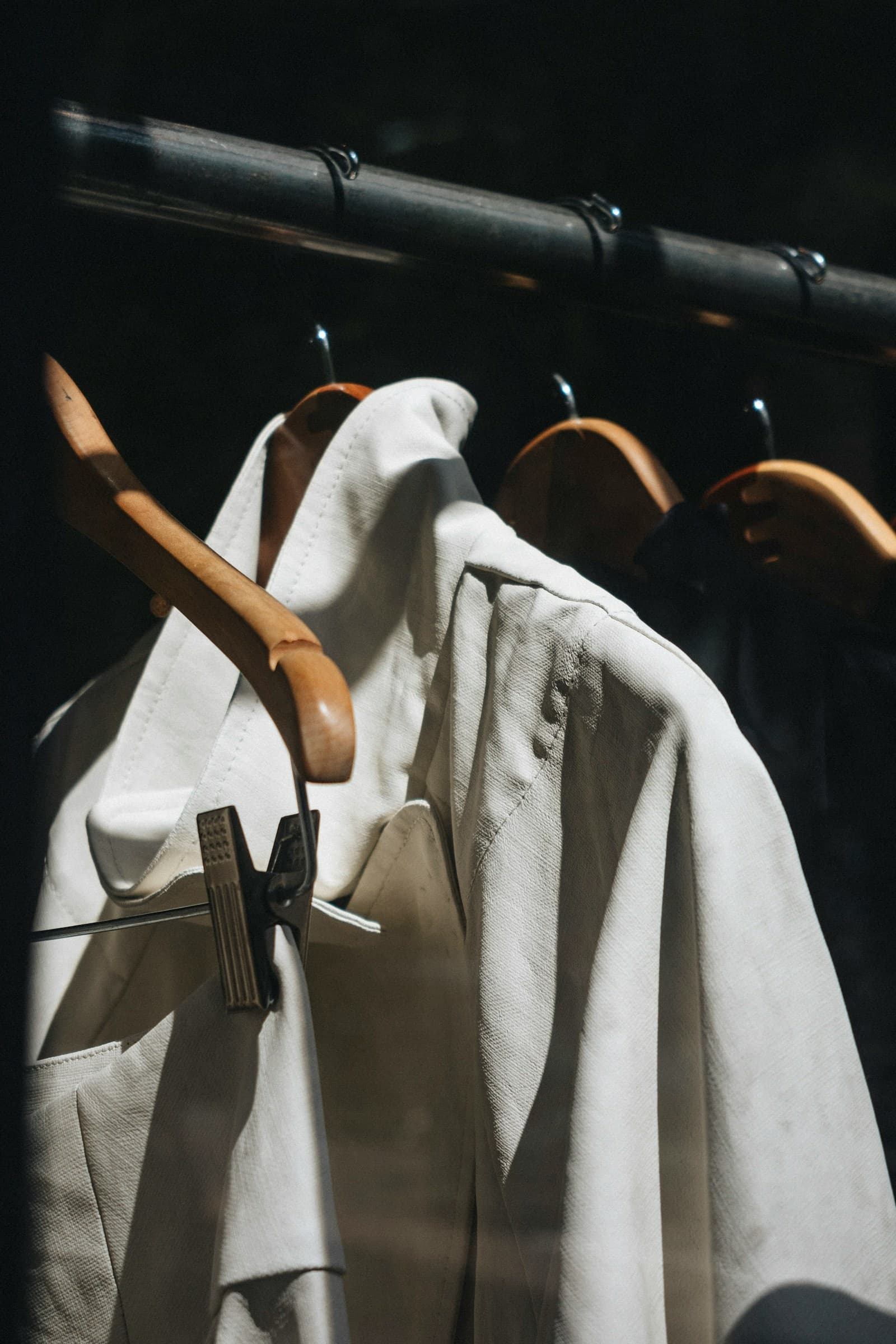
A dress is finished when someone has looked at it closely. It is pressed; seams, symmetry and measurements are checked. Then the label goes on: for us, Made in Italy is not a slogan, it is an address. Ours.
Finally the garment leaves. Inside, it carries the work of everyone you have met on this page.
Six steps,
one accordo.
In Italian, accordo means both agreement and chord: different notes sounding together. Ours are hands, paper, machines and fabric.
Accordo was founded in 2020. A new company doing work with a long history behind it: no nostalgia, plenty of respect.
CAD, marker making and plotting make precision repeatable and cut fabric waste. People do the rest.
Design, pattern, cutting and sewing live in the same place. Fewer hand-offs, shorter distances, more control over every garment.
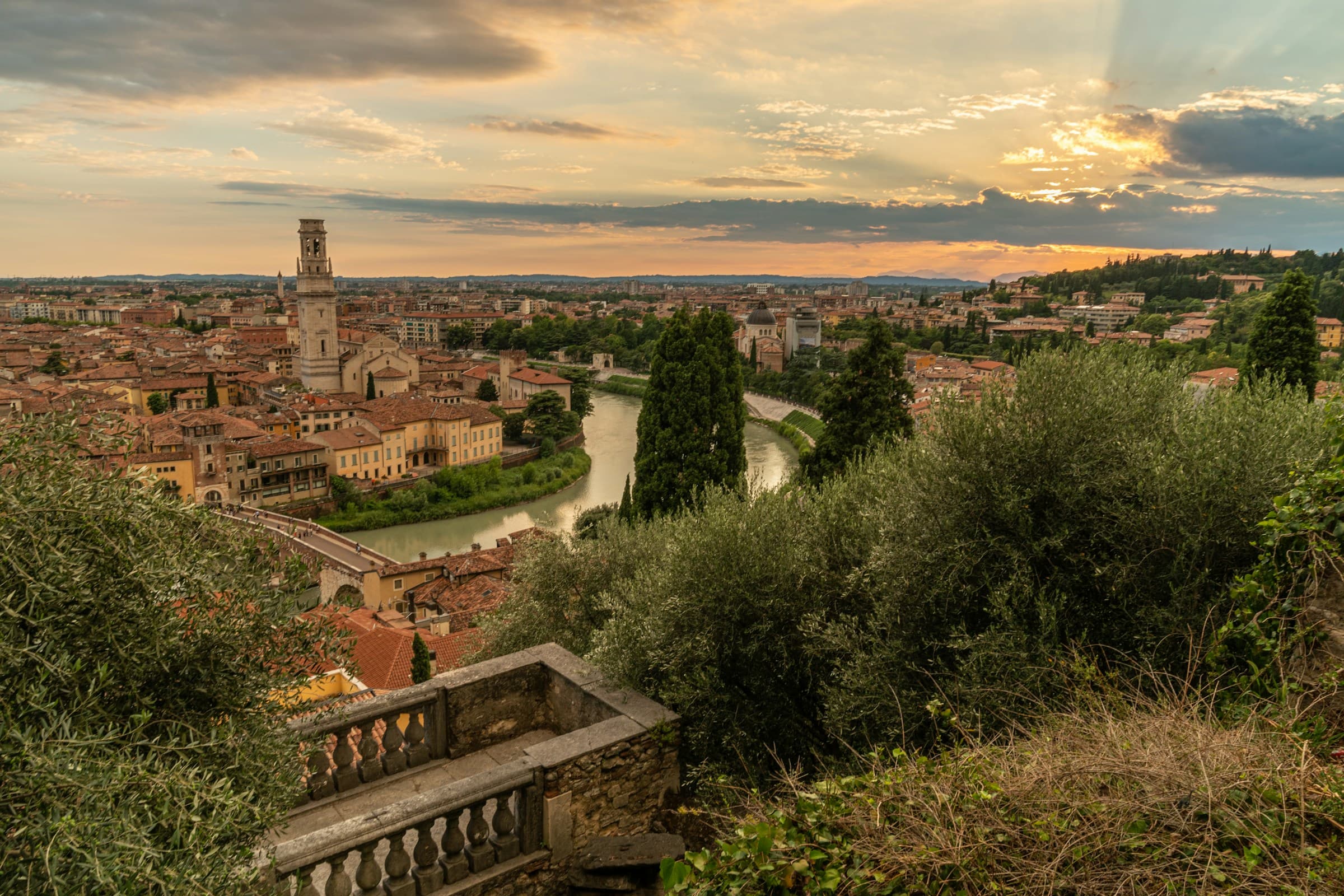
We are in Mozzecane, south-west of Verona, in a province where clothing has been industrial culture for generations. Here garment-making know-how has passed from workshop to workshop, growing into a recognised district.
It is a land used to working well and on time, a few kilometres from Verona airport and the Brenner motorway, the gateway to Europe. For anyone choosing where to produce it means one simple thing: people who know what they are doing.
Tell us about your project: sampling, production runs, a visit to the workshop. We reply quickly — and gladly.